Single-Cell Sequencing: Understanding Cellular Heterogeneity Through High-Resolution Genomic Analysis
Discover single-cell sequencing, including scRNA-seq, single-cell genomics, transcriptomics, multiomics, workflows, applications, and bioinformatics analysis.
What Is Single-Cell Sequencing?
Single-cell sequencing is an advanced molecular biology technology that enables researchers to study the genetic and molecular characteristics of individual cells rather than analyzing a mixed population of cells. Traditional sequencing methods often generate an average signal across thousands or millions of cells, potentially masking important differences between individual cell populations. By analyzing cells individually, single-cell sequencing provides high-resolution information about cellular diversity, gene expression, genomic variation, and molecular states. This technology has become an important tool in single-cell genomics, transcriptomics, molecular biology, biotechnology, and biomedical research.
Why Is Single-Cell Sequencing Important?
Cells within the same tissue can have significantly different molecular profiles. This phenomenon, known as cellular heterogeneity, can make it difficult to understand complex biological systems using bulk sequencing approaches.
Single-cell technologies help researchers identify:
- Distinct cell populations
- Rare cell types
- Differences in gene expression
- Cellular states and molecular signatures
- Cell-to-cell variation
- Developmental trajectories
- Genetic and genomic variation
- Interactions between different cell populations
Instead of asking only “What genes are present in this tissue?”, researchers can investigate “Which genes are expressed in each individual cell, and how do cells differ from one another?”
Single-Cell RNA Sequencing (scRNA-seq)
One of the most widely used applications is single-cell RNA sequencing (scRNA-seq).
Single-cell RNA-seq measures RNA molecules from individual cells to generate detailed gene expression profiles. Researchers can then use computational analysis to classify cells according to their transcriptional characteristics.
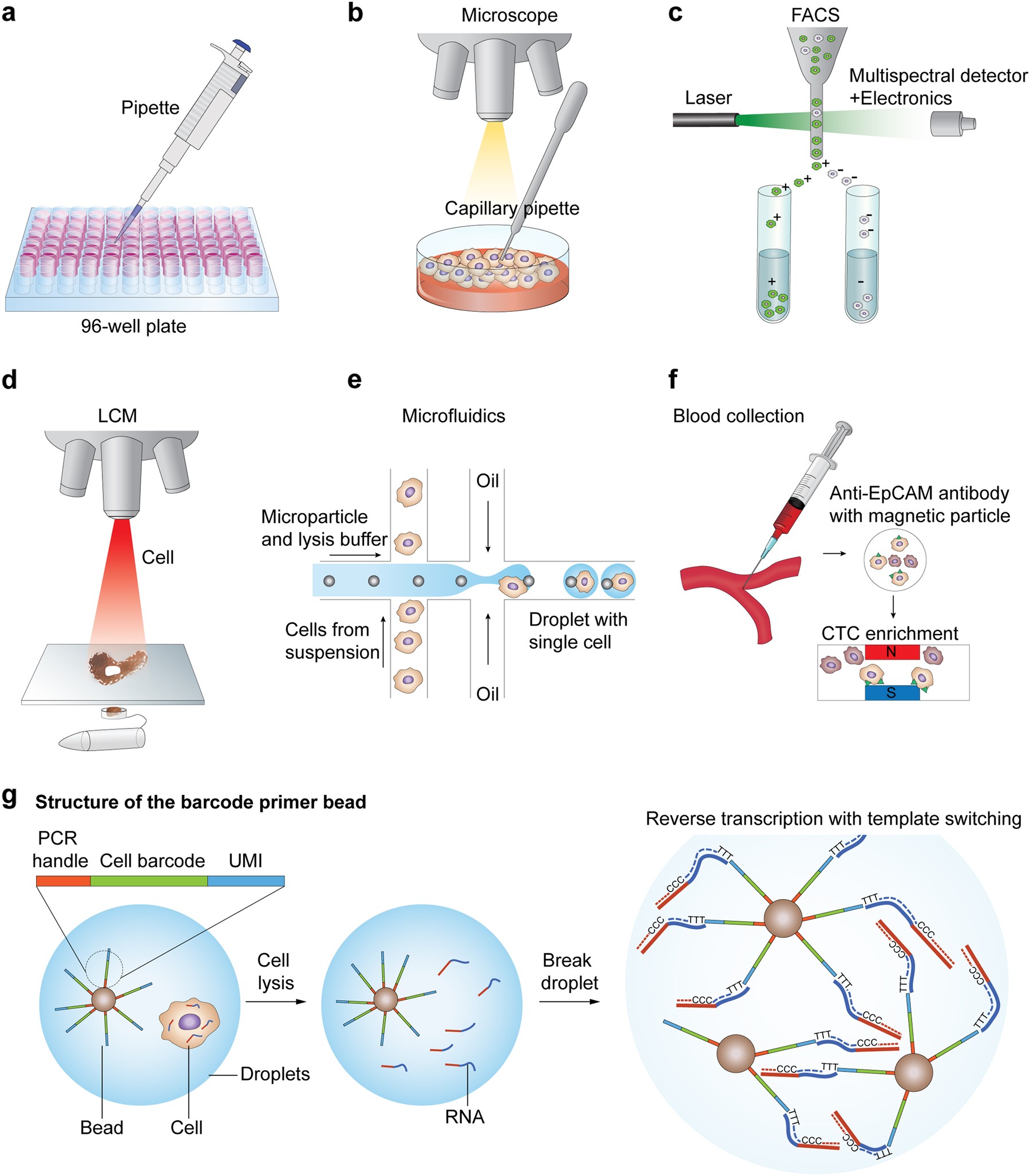
A typical scRNA-seq workflow includes:
- Sample preparation : Tissue or cell samples are prepared for single-cell analysis.
- Cell isolation : Individual cells are separated or partitioned.
- Cell lysis and RNA capture : RNA molecules are captured from individual cells.
- Library preparation : Sequencing libraries are generated.
- Next-generation sequencing (NGS) : Libraries are sequenced to produce molecular data.
- Bioinformatics analysis : Computational tools identify cell populations, gene expression patterns, and molecular differences.
The resulting datasets can contain thousands of individual cells and thousands of measured genes per cell.
Single-Cell Genomics Beyond RNA
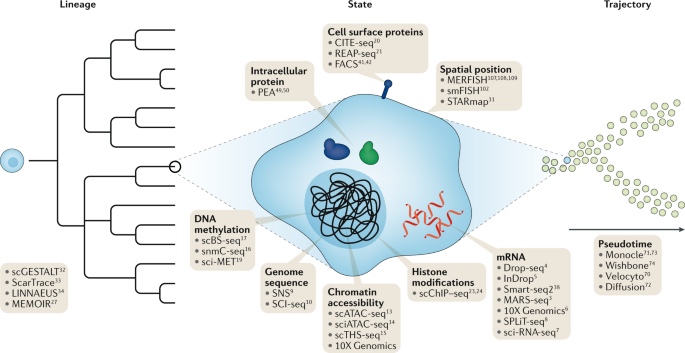
Although single-cell RNA sequencing is one of the most established approaches, single-cell sequencing encompasses several technologies.
Single-Cell DNA Sequencing
Single-cell DNA sequencing can be used to investigate genomic variation between individual cells. It can provide information about mutations, copy-number variation, and genomic heterogeneity.
Single-Cell Epigenomics
Single-cell epigenomic approaches examine regulatory features such as chromatin accessibility. Technologies such as single-cell ATAC-seq can help researchers investigate how regulatory elements differ between cell populations.
Single-Cell Multiomics
Single-cell multiomics combines multiple molecular measurements from the same cells. Depending on the technology, researchers may simultaneously investigate RNA, chromatin accessibility, proteins, or other molecular features.
This integrated approach can provide a more comprehensive view of cellular identity and function.
Applications of Single-Cell Sequencing
Single-cell sequencing has applications across many areas of modern life science research.
Cell Atlas Research
Large-scale single-cell projects can characterize cell populations across tissues and biological systems. These studies contribute to the development of detailed cell atlases and reference datasets.
Developmental Biology
Researchers can use single-cell transcriptomics to investigate how cells change during development and differentiation.
Immunology Research
Single-cell analysis can distinguish different immune-cell populations and characterize their molecular profiles, providing detailed information about cellular diversity.
Cancer Research
Tumor samples often contain multiple genetically and molecularly distinct cell populations. Single-cell sequencing in cancer research can help researchers investigate tumor heterogeneity, cellular states, and interactions between different cell populations.
Neuroscience
The nervous system contains many specialized cell types. Single-cell RNA sequencing can help researchers characterize neuronal and non-neuronal populations based on their transcriptional profiles.
Microbiome and Host-Cell Research
Single-cell approaches can also be applied to investigate individual microbial cells and host–microbe interactions, expanding the possibilities of high-resolution molecular analysis.

Single-Cell Sequencing and Bioinformatics
The large datasets generated by single-cell sequencing require specialized bioinformatics and computational analysis.
Common stages of a single-cell data analysis workflow include:
Quality control → Normalization → Dimensionality reduction → Clustering → Cell-type identification → Differential expression → Biological interpretation
Popular analytical approaches include PCA, UMAP, t-SNE, clustering, differential gene expression analysis, and cell-type annotation.
Because single-cell datasets can contain thousands or millions of measurements, computational tools are essential for transforming sequencing data into biologically meaningful information.
Advantages of Single-Cell Sequencing
Compared with conventional bulk sequencing, single-cell sequencing offers several important advantages:
- High-resolution analysis of individual cells
- Identification of rare cell populations
- Detection of cellular heterogeneity
- Detailed gene expression profiling
- Characterization of distinct cellular states
- Integration of multiple molecular layers
- Improved understanding of complex biological samples
However, researchers also need to consider factors such as sample preparation, sequencing depth, data quality, computational requirements, and potential technical variation.

The Future of Single-Cell Analysis
The development of single-cell sequencing technologies continues to expand the resolution of molecular research. Improvements in sequencing platforms, cell capture technologies, computational pipelines, and multiomics approaches are enabling researchers to analyze increasingly complex biological systems.
The combination of single-cell genomics, transcriptomics, epigenomics, proteomics, and spatial analysis is creating new opportunities for comprehensive cellular profiling.
As sequencing technologies become more accessible, single-cell analysis is expected to remain an important component of modern life science research and molecular biology.
Explore Single-Cell Sequencing Research
For researchers working with cellular heterogeneity, gene expression, genomics, and molecular profiling, single-cell sequencing provides a powerful approach for studying biological systems at unprecedented resolution.
Explore research products, molecular biology tools, sequencing resources, and related technologies to support your single-cell analysis and genomics workflows.